

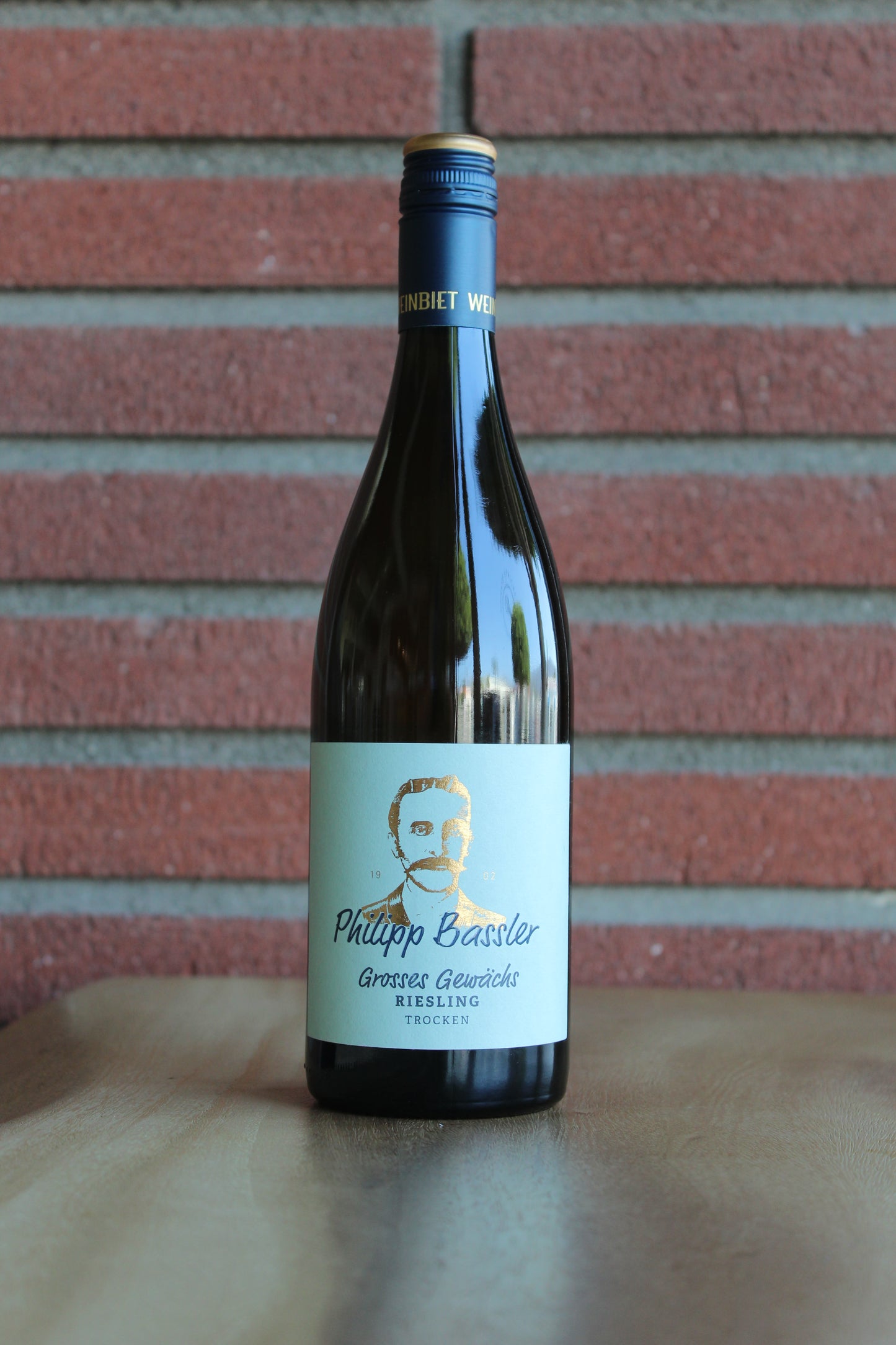
Weinbiet Manufaktur "Philipp Bassler" GG Riesling Trocken 2020
Weinbiet Manufaktur "Philipp Bassler" GG Riesling Trocken 2020
Pfalz, Germany
Couldn't load pickup availability
Share
-
Tasting Notes
This dry Riesling has a lifted, expressive nose of lime zest, green apple, white peach, and a touch of grapefruit pith, underscored by a delicate minerality likely as a result of the marl and clay soils of its Pfalz vineyard origin. The fruit is vivid but restrained—more citrus and orchard than tropical—setting the tone for a wine that’s focused, racy, and reflective of the Pfalz region.
On the palate, the wine is dry and taut, but textured, delivering flavors of crisp citrus, apricot skin, lemon oil, and a flinty, almost smoky note that increases with aeration. There's an energetic backbone of acidity that keeps the wine lifted, yet it's buffered by a subtle creaminess—likely the result of extended lees aging and partial fermentation in large, neutral oak barrels. This balance between structure and softness is a hallmark of the Grosses Gewächs style shown here.
The finish is long, precise, and layered. After the initial fruit notes, a second layer of flavors come to the fore: notes of salted lemon peel, crushed stone, and a faint hazelnut richness. This is a wine that wears its GG pedigree with quiet confidence—showing depth and power without flash, and offering just enough generosity to make it compelling in its youth, though it’s clearly built to evolve over time.
Wine Enthusiast also gave it 90 points, highlighting broad citrus and pear notes alongside its textural complexity and aging potential through 2027.
Decanter (89 points) and Meininger’s Best of Riesling (88 points) echoed the wine’s clean, dry style, noting its precise structure and solid regional character.
-
Story
Weinbiet Manufaktur is a historic cooperative winery founded in 1902, based in Neustadt an der Weinstraße in the heart of Germany’s Pfalz wine region. The winery takes its name from the Weinbiet mountain, a landmark that towers over the region’s vineyards and influences the local microclimate. Today, the cooperative is made up of more than 30 growers farming around 300 hectares of vines, many of which are located on prime vineyard sites throughout the Mittelhaardt.
Despite its size, Weinbiet Manufaktur has carved out a reputation for quality, precision, and consistency. It balances the benefits of cooperative scale—shared resources, deep local knowledge, and long-term grower relationships—with a modern winemaking team focused on terroir expression and sustainable practices. Their cellar is equipped with state-of-the-art technology, yet the focus remains on letting the fruit and the site speak.
The “Philipp Bassler” line is the estate’s prestige range, named in honor of one of its founding members and an early pioneer of quality-driven production. These wines are only produced in outstanding vintages and represent the pinnacle of what the cooperative can achieve—drawn from meticulously selected vineyard parcels and made with extended lees aging and minimal intervention. The Grosses Gewächs (GG) designation on this Riesling marks it as a dry wine from a classified top vineyard, made under strict standards.
While many cooperatives aim for volume, Weinbiet Manufaktur proves that collaborative winemaking can still be about excellence. The Philipp Bassler GG Riesling is proof that tradition, scale, and quality don’t have to be at odds.
-
Somm Notes
If German wine labels feel like a foreign language, you're not alone. One of the biggest sources of confusion? The difference between quality designations and sugar level categories.
Let’s clear it up: Germany's wine classification system is based on two key things—quality level and grape ripeness at harvest (which can affect sweetness, but not always). Wines labeled Kabinett, Spätlese, Auslese, etc., refer to how ripe the grapes were when picked—not how sweet the wine actually is. These categories can apply to both dry and sweet wines. So yes, you can have a Spätlese Trocken, which is a dry wine made from very ripe grapes.
On the other hand, Germany's VDP classification system—developed by an elite group of producers known as the Verband Deutscher Prädikatsweingüter (VDP)—is a separate hierarchy focused on vineyard quality, not grape sugar. Think of it like the Grand Cru system in Burgundy. Wines in this system are labeled by vineyard pedigree: Gutswein (estate), Ortswein (village), Erste Lage (premier cru), and Grosses Gewächs (grand cru equivalent).
What Is Grosses Gewächs?
Grosses Gewächs (GG) literally means “Great Growth”—and it’s the top tier in the VDP quality pyramid for dry wines. These wines must come from classified top vineyard sites, be made from traditional grape varieties (like Riesling, Spätburgunder, etc.), and adhere to strict production standards, including hand-harvesting, low yields, and extended aging. In short: GG = Germany’s finest dry wines.
Grosses Gewächs wines are highly sought-after by collectors and sommeliers because they express both site and vintage with remarkable clarity. They age beautifully and offer the kind of structure, complexity, and finesse normally reserved for top white Burgundy—but with their own unmistakable German fingerprint. When you see GG on a label, you’re looking at a wine that represents the best of the best in German dry wine. Wines with this distinction typically cost $100 and define the Riesling offerings on MICHELIN-starred lists.
Wine Enthusiast – 90 Points
"Broad and textural, this dry Riesling opens with generous notes of lemon, apple, and pear, laced with a hint of salty minerality. It’s creamy and rich without losing focus, and the long finish suggests strong aging potential through 2027."
Decanter – 89 Points
"A clean, precise Grosses Gewächs showing citrus and orchard fruit with bright acidity and well-balanced structure. Still tight, with energy and room to evolve in bottle. A serious Pfalz expression."
This wine’s bright acidity, mineral backbone, and dry finish make it incredibly food-friendly. Pair it with:
Classics: Pork schnitzel with lemon, roasted chicken with herbs, seared scallops, or trout almondine.
Adventurous: Thai green curry, Vietnamese spring rolls, sushi with yuzu kosho, or a citrusy ceviche.
Cheese Pairings: Aged gouda, Comté, or a soft-ripened goat cheese.
If you're pouring this with food, think clean flavors, vibrant herbs, and dishes that echo the wine's brightness and structure. It’ll sing with anything that has a balance of richness and acidity—or even a bit of heat.
-
Region
Stretching along the eastern edge of the Haardt Mountains, the Pfalz is one of Germany’s most exciting and versatile wine regions -it's the warmest and driest area in the country, seein 2000 hours of sunshine a year. With a warm, dry climate and a long growing season, it produces wines that balance ripeness and freshness, offering bold aromatics, bright acidity, and impressive structure across a wide range of grape varieties. Pfalz region.
Unlike cooler regions like the Mosel, the Pfalz enjoys ample sunshine and protection from harsh weather thanks to the Haardt range (a continuation of France’s Vosges Mountains). This results in fuller-bodied wines, especially Rieslings, with flavors that lean into stone fruit, citrus, herbs, and mineral tones, often with a bit more power and presence.
The soils here are diverse—limestone, loess, red sandstone, volcanic basalt, marl, and clay—which give winemakers a broad palette for crafting site-specific wines. In particular, wines from classified top vineyards (like those labeled Grosses Gewächs) often show remarkable depth, aging potential, and a clear sense of place.
The Pfalz is also a region that marries tradition with modernity. Long known for precise, clean winemaking, it has embraced a new wave of producers who value sustainable farming, spontaneous fermentation, and minimal intervention—letting the vineyard speak through the glass.
Whether you're tasting a dry Riesling, a Spätburgunder (Pinot Noir), or one of the region’s lesser-known gems, Pfalz wines consistently overdeliver on quality, drinkability, and character. It's a region to watch—and a region to drink.