

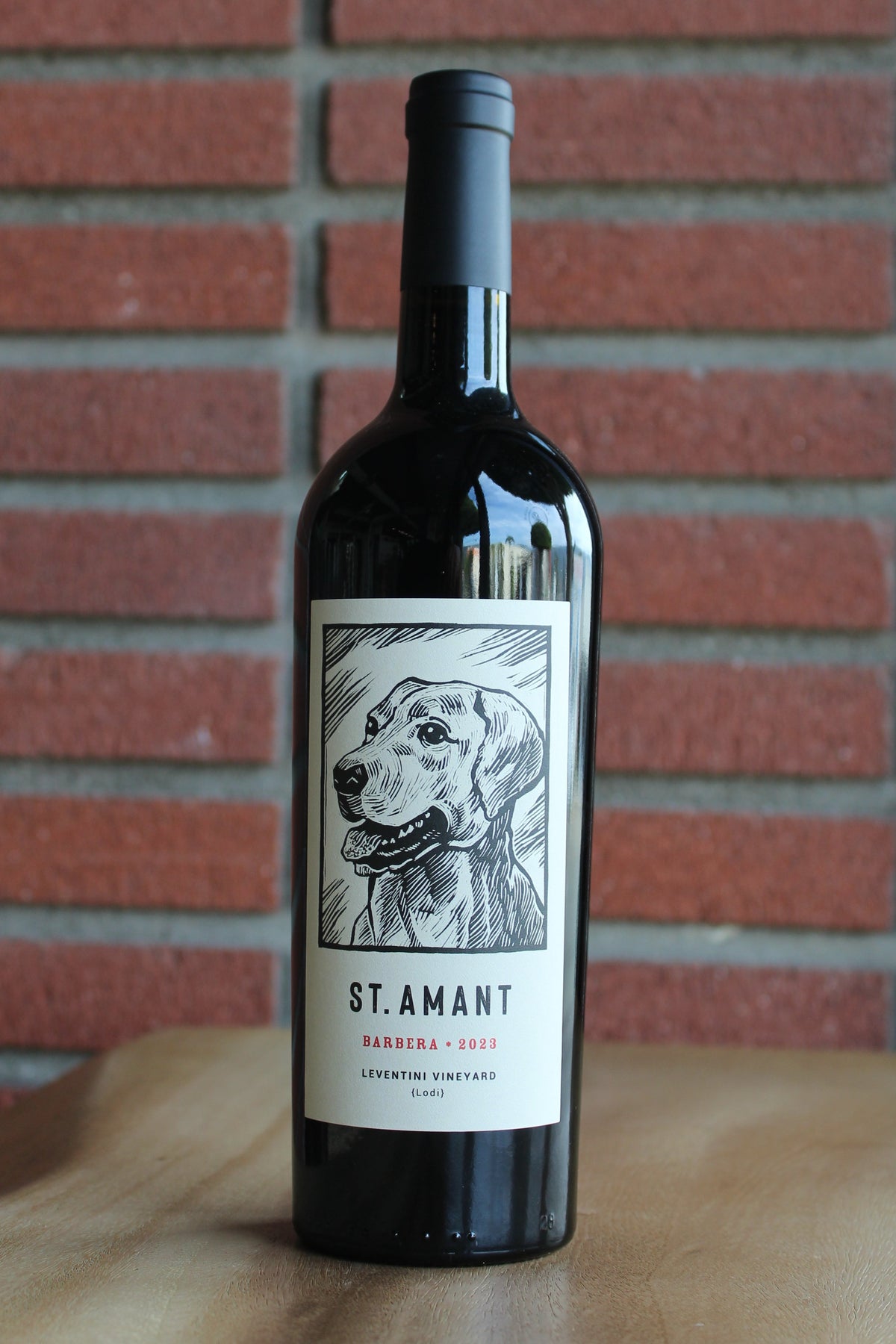
2023 St. Amant Barbera | Leventini Vineyard, Lodi
2023 St. Amant Barbera | Leventini Vineyard, Lodi
Jahanti AVA, Lodi, Sierra Foothills, California
Couldn't load pickup availability
Share
-
Tasting Notes
St. Amant Barbera is the life of the dinner party. Often called their “pizza wine,” this isn’t a bottle that demands a tuxedo; it’s a bottle that demands a corkscrew and a large bowl of pasta.
Planted in 1972, these old, gnarled vines in the Jahant sub-AVA produce small, palm-sized clusters that pack a punch. The 2023 vintage—one of the coolest in recent memory—allowed the fruit to hang longer, developing deep, complex flavors while maintaining a bright, electric acidity. It’s medium-bodied and "crunchy," bursting with fresh cranberry, dried cherry, and a hint of wet earth. With just 10 months in oak (mostly neutral), the fruit is the star here—vibrant, unpretentious, and effortlessly delicious. -
Story
St. Amant Winery is a quintessential Lodi underdog story that began with a high-stakes gamble. Founded in 1979 by Tim and Barbara Spencer, the winery’s birth is the stuff of California legend: in 1981, after a local producer went bankrupt without paying for their grapes, Tim took matters into his own hands. Under the cover of night, he "bootlegged" his own fermenting wine out of the cellar before the creditors could seize it. That defiant act launched the St. Amant label and set the tone for decades of unconventional winemaking.
Though they began in the Sierra Foothills of Amador County, the Spencers eventually found their soul in the sandy soils of Lodi. Today, the winery is tucked away in an unpretentious industrial warehouse—a former post-Prohibition cooperative—on Lodi’s east side. Now led by Barbara and her son, winemaker Stuart Spencer, St. Amant has become a champion of "forgotten" grapes and historic vineyards. They are renowned for their work with Portuguese varietals and 100-year-old Zinfandel vines, proving that world-class wine doesn’t need a fancy tasting room—it just needs great dirt and a little bit of a rebel spirit.
-
Somm Notes
The story of St. Amant’s Barbera is one of persistence and a very good meal. For years, Ted Leventini, a family friend and legendary local grower, pestered the Spencers to make Barbera from his vineyard. At the time, the family already had their hands full with unusual Iberian varieties and Port-style wines. They didn't think they needed another niche grape.
The tide turned when Ted, an accomplished chef, offered to cook for a Spencer family wedding. Feeling a "delicious obligation" to the man who fed their guests, they agreed to take a few tons of his fruit in 1998. That first vintage was an instant sensation—winning awards and selling out in months. What started as a favor to a friend became a 25-year mainstay of the St. Amant portfolio. It’s a testament to the Spencer family's philosophy: they don't chase trends; they follow great fruit and loyal friendships.
The Region: Lodi & The Legacy of the Rules
Lodi is often called the "Zinfandel Capital of the World," but its true strength lies in its diversity and its farmers. The Spencer family hasn't just farmed this land; they’ve helped define its future. Stuart Spencer (winemaker and Executive Director of the Lodi Winegrape Commission) was instrumental in conceptualizing LODI RULES—California’s first third-party certified sustainable winegrowing program.
What began as neighborhood meetings in the 90s, where farmers compared notes over fences, has grown into a global gold standard for responsible farming. Under the Spencers' leadership, Lodi transitioned from a region known for bulk production to a hub of artisan winemaking, proving that "sustainability" isn't just a buzzword—it's a way to ensure these historic vineyards survive for the next 100 years.
The Ultimate “Table Wine”
While some wines demand a quiet room and a tuxedo, the 2023 St. Amant Barbera demands a crowded table and a corkscrew. Often affectionately dubbed the ultimate “pizza wine,” its high-toned acidity and "crunchy" red fruit act as a natural palate cleanser, slicing through rich fats and standing up to the tang of a classic tomato sauce. To highlight its vibrant cranberry and dried cherry core, pair it with wood-fired fennel sausage pizza, slow-roasted pork belly, or a wild mushroom risotto topped with aged Parmesan. For a more casual Lodi-style afternoon, it shines alongside a board of sharp Provolone and peppery Salami Felino.
Somm Tip: Because of the cooler 2023 vintage, this Barbera loves a slight chill (about 15 minutes in the fridge). Serving it at roughly 15°C (60°F) tightens the fruit profile and makes that electric acidity even more refreshing. -
Region
Lodi, often called the "Zinfandel Capital of the World," is a California viticultural treasure defined by its unique geographical "gap." Situated directly east of the Sacramento-San Joaquin River Delta, the region benefits from a cooling phenomenon known as the "Delta Breeze." As heat rises in the valley, it pulls fresh marine air from the San Francisco Bay, causing dramatic diurnal temperature shifts. This allows grapes to reach peak sugar ripeness during the day while maintaining the essential acidity and structural balance that prevents "flabby" wines.
The second half of Lodi’s magic lies beneath the surface. The Mokelumne River AVA, the heart of the region, is characterized by its signature Tokay Fine Sandy Loam. These are deep, well-draining, granitic soils deposited over millennia by the Sierra Nevada mountain runoff. Because these sandy soils are naturally resistant to phylloxera, Lodi is home to some of the world’s most prized own-rooted, old-vine Zinfandel. Beyond Zinfandel, the Mediterranean climate and diverse soil types allow a wide range of varieties to thrive—from heritage Carignane and Alicante Bouschet to bold Cabernet Sauvignon and even traditional Portuguese varieties like Touriga Nacional. The result is a region capable of producing wines with incredible concentration, depth, and a sense of history in every glass.
The Leventini Vineyard
The Leventini Vineyard sits in the heart of the Jahant AVA, characterized by its unique pinkish Acampo sandy loam soils. Originally planted in 1972 to provide fruit for the famous "Gallo Hearty Burgundy," the vineyard has outlived its industrial beginnings to become a heritage site. Now over 50 years old, the vines look "like hell" to the untrained eye—gnarled, uneven, and difficult to harvest—but they produce a depth of flavor that young vines simply cannot replicate. It remains a cornerstone of Lodi’s viticultural history and a primary example of why the Leventini family’s "pestering" was the best thing to ever happen to St. Amant.