

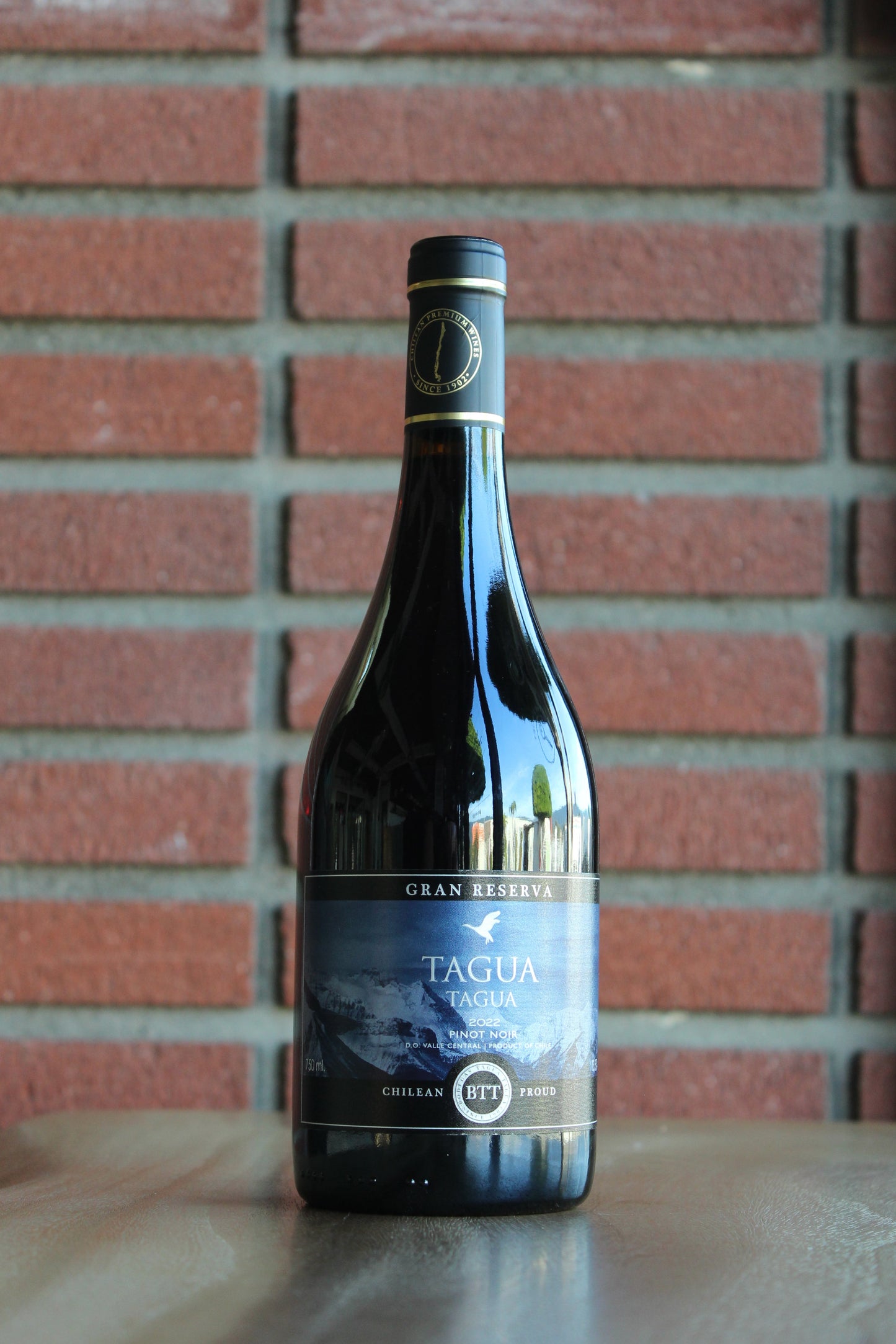
Bodegas Tagua Tagua Gran Reserva Pinot Noir 2022
Bodegas Tagua Tagua Gran Reserva Pinot Noir 2022
Rapel Valley, Central Valley, Chile
Couldn't load pickup availability
Share
-
Tasting Notes
The 2022 Bodegas Tagua Tagua Pinot Noir Gran Reserva opens with inviting aromatics of ripe red cherry, raspberry, and strawberry, layered with subtle notes of dried herbs, baking spice, and a touch of forest floor. There’s a gentle earthiness on the nose that adds depth without overpowering the fruit.
On the palate, the wine is medium-bodied and well-balanced, showing juicy red fruit flavors framed by soft tannins and refreshing acidity. Hints of clove, vanilla, and savory spice emerge through the mid-palate, likely influenced by oak aging, while the finish remains clean, smooth, and quietly persistent.
Rapel Valley’s combination of warm ripening conditions and notable day–night temperature shifts plays an important role in the wine’s profile. The warmth encourages expressive fruit and round texture, while cooler evenings help preserve acidity and aromatic lift — a balance that allows this Pinot Noir to feel ripe yet fresh, with structure that elevates it beyond a simple fruit-forward style.
This Pinot Noir is an easy match for roasted chicken, duck breast, pork tenderloin, or mushroom-driven dishes like risotto or grilled portobellos. It also pairs beautifully with salmon, herb-roasted vegetables, empanadas, and semi-soft cheeses. A great choice for those who enjoy Pinot Noir with a touch more weight and warmth, while still retaining finesse. -
Story
Bodegas Tagua Tagua is a historic family-run winery rooted in Chile’s wine country and steeped in more than a century of winemaking tradition. The story began with José Gregorio Correa Albano in the early 1900s, laying the foundation for what would grow into one of Chile’s respected wine estates. Over five generations, the Correa family has nurtured their vineyards and refined their craft, evolving from local growers to producers with a global footprint, exporting to over 30 international markets.
Located primarily in Chile’s Central Valley — including the Rapel, Cachapoal and Maule sub-regions — the estate benefits from a diversity of soils and climates that give their wines both expressive fruit character and structural balance. Today, brothers Santiago, Francisco, and José Tomás Correa Lisoni manage the winery with a modern vision that honors their heritage. Their focus is on sustainable viticulture and quality-driven winemaking, producing wines that reflect the authentic terroir of Chile while maintaining approachability and depth.
The Tagua Tagua name itself is tied to the land — inspired by the area around San Vicente de Tagua Tagua, where the winery’s vineyards and production facilities are centered. This connection to place and family underscores every bottle, capturing the spirit of Chilean terroir and the Correa family’s enduring commitment to craftsmanship.
-
Somm Notes
Chile’s wine regions are truly unique in the Southern Hemisphere. Nestled between the Andes Mountains to the east and the Pacific Ocean to the west, Chilean vineyards benefit from remarkable geographic protection. This isolation shields vines from many pests and diseases that trouble other wine regions, allowing for healthier vineyards and lower intervention winemaking. The coastal influence brings cool breezes and morning fog that moderate temperatures, while higher-altitude sites slow ripening and enhance acidity, structure, and aromatic precision — a perfect combination for delicate varieties like Pinot Noir. These natural conditions create wines that are both expressive and balanced, capturing the essence of their specific vineyard sites.
Chilean wines often blend New World fruit expression with Old World restraint, showcasing clarity, freshness, and site expression
Pinot Noir offers red fruit, gentle earthiness, and floral nuance. Compared to Burgundy, Chilean examples are fruit-forward and less tannic, and compared to Oregon or California, they are slimmer, elegant, and terroir-driven, with freshness preserved by altitude and cool nights.
Sauvignon Blanc from Chile is bright and clean, with citrus, green apple, and tropical notes. Compared to New Zealand, it’s less overtly grassy, and compared to the Loire, it’s riper and rounder, while still retaining refreshing acidity from coastal breezes.
Cabernet Sauvignon combines ripe fruit intensity with subtle herbal or savory notes. Unlike Napa Cab, it’s more restrained and earthy; compared to Bordeaux, it’s approachable in youth yet maintains structure and balance thanks to cooler vineyard sites. -
Region
The Rapel Valley is one of Chile’s most important wine regions, located roughly 100–180 km south of Santiago in the heart of the Central Valley wine zone. It sits between the cities of Rancagua and San Fernando and includes two well-known sub-regions — Cachapoal to the north and Colchagua to the south — both of which are prized for producing rich, expressive red wines.
The climate here is warm and Mediterranean, featuring hot, dry summers and cooler, wet winters. The region benefits from strong diurnal temperature shifts — warm daytime heat that helps ripen fruit and cooling breezes that preserve acidity and aromatic clarity in the grapes.
Soils in the Rapel Valley tend to be deep, alluvial, and varied, with mixtures of sand, clay, and loam that promote balanced vine growth and structured fruit. They are nourished by water from the Rapel and Cachapoal Rivers, which help sustain healthy vines through the growing season.
While the valley is most widely recognized for classic red varieties such as Cabernet Sauvignon, Merlot, and Carmenère, winemakers have also found success with cooler-climate grapes like Pinot Noir, especially in sites with a bit more breeze and elevation that help retain freshness and nuanced aromatics in this more delicate varietal.