

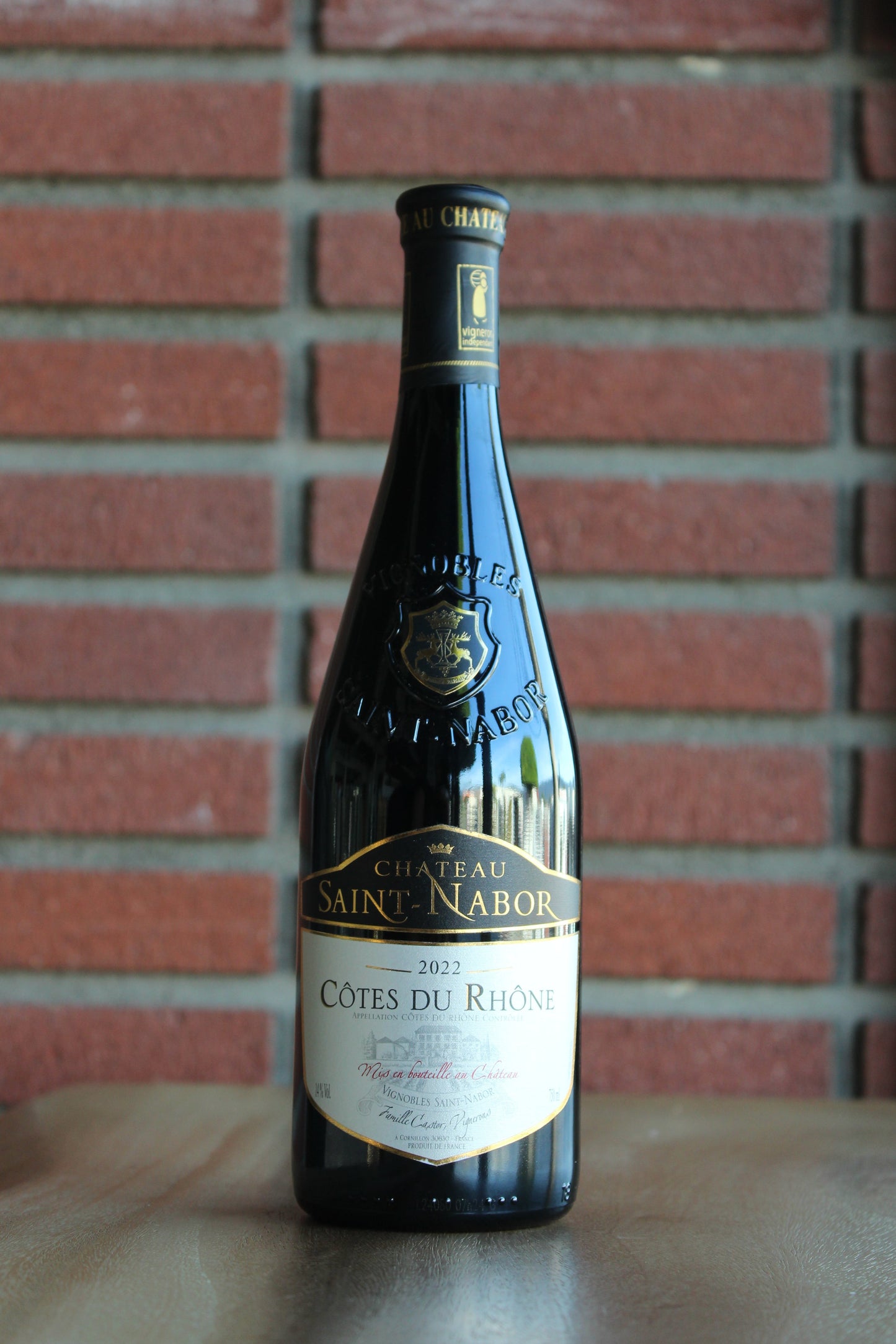
Chateau Saint Nabor Cotes du Rhone Red 2022
Chateau Saint Nabor Cotes du Rhone Red 2022
Cotes du Rhone, Rhone Valley, France
Couldn't load pickup availability
Share
-
Tasting Notes
Crafted by a family-owned estate with generations of winemaking expertise, this wine brings together the signature Rhône varietals—Grenache, Syrah, and Mourvèdre—into a vibrant, approachable red that is as versatile as it is flavorful.
On the palate, it delivers luscious red and black fruit notes, including ripe cherries and blackberries, complemented by subtle spice, earthy undertones, and soft, integrated tannins. The wine’s structure and balance make it enjoyable now while offering the potential to evolve with a few years of cellaring.
This versatile Rhône red pairs beautifully with a wide range of dishes, making it perfect for both casual nights and special occasions. Enjoy it alongside herb-roasted chicken, lamb, or pork, or complement its earthy spice with rustic French fare like ratatouille, coq au vin, or a hearty cassoulet. It also shines with charcuterie and cheese boards featuring cured meats and aged cheeses, as well as tomato-based pasta dishes, mushroom risottos, or savory pizzas. For lighter fare, the wine enhances grilled vegetables, roasted Mediterranean-style dishes, and hearty grain salads. Easy go to whether you’re hosting a cozy night at home, a casual dinner party, or an outdoor gathering. -
Story
Château Saint Nabor is a historic, family‑owned wine estate rooted in the heart of France’s renowned Rhône Valley, nestled in the small medieval village of Cornillon in the Cèze Valley. With a winemaking tradition that dates back to the late 19th century (around 1870), the Castor family has been working these vineyards for six generations, passing down both viticultural knowledge and a deep respect for the land from one generation to the next.
Today, brothers Jérémie and Raphaël Castor lead the estate, blending ancestral practices with contemporary expertise. Both have formal training in viticulture and oenology, and their leadership reflects a commitment to crafting wines that are authentic expressions of the Southern Rhône terroir. Their approach honors tradition while incorporating thoughtful, modern techniques in the cellar.
The estate spans roughly 160 hectares of sustainably farmed vineyards planted across varied soils that contribute to the character and complexity of each wine. All of Château Saint Nabor’s wines are made exclusively from estate‑grown grapes, allowing the Castors to maintain meticulous control over quality from vine to bottle. The property is also certified High Environmental Value (HVE), underscoring the family’s dedication to environmentally respectful farming practices that protect soil, biodiversity, and ecosystem health.
Set just northwest of the illustrious Châteauneuf‑du‑Pape region, but firmly rooted in the Côtes du Rhône and Côtes du Rhône Villages appellations, the estate produces a diverse portfolio of reds, whites, rosés, and even sparkling styles that reflect both the Mediterranean‑influenced climate and the nuanced geology of the Rhône landscapes. These wines honor the Rhône’s classical varieties—Grenache, Syrah, Mourvèdre, and others—yet each bottling displays a distinct sense of place and familial craftsmanship.
-
Somm Notes
What “Independent Winemaker” Means on a Wine Label
When you see “Vigneron Indépendant” on a bottle of French wine, it’s more than just a phrase — it’s a collective trademark and a mark of artisanal winemaking that signals a particular approach and philosophy behind the wine.
At its core, the term means that the winemaker is truly independent: they cultivate their own grapes, vinify and age the wine in their own cellar, and handle the bottling and sale themselves. In other words, the person whose name is on the label was intimately involved in every stage of the wine’s journey from vine to bottle.
This commitment is part of a broader philosophy upheld by the Confédération des Vignerons Indépendants de France (Independent Winegrowers of France), a national organization that promotes and defends independent viticulture. To earn the right to carry the Vigneron Indépendant logo, producers must join the organization, comply with its charter, and agree to a set of practices that emphasize respect for terroir and hands‑on production.
The charter these producers adhere to includes:
- Cultivating and harvesting grapes on their own vineyards, with intimate knowledge of the soil and microclimate.
- Vinifying and maturing the wine themselves — not outsourcing fermentation or blending to a cooperative or négociant.
- Bottling and selling the wine directly under their own estate’s name.
- Maintaining a connection to traditional winemaking while expressing their own personalities and style.
Because the Vigneron Indépendant logo is a registered collective trademark (protected in France and the EU), its use is regulated and controlled — only members in good standing who pay dues and follow the logo’s graphic standards can display it on their bottles.
Why It’s Special and Important
For wine lovers and collectors, the “Vigneron Indépendant” label is a trust mark of authenticity and individuality. It represents a commitment to artisanal quality, terroir expression, and personal passion, rather than industrial or mass‑produced wine.
Choosing a wine with this designation often means you’re buying:
- A wine with a direct link to the winemaker and their vineyard practices.
- A bottle that reflects unique terroir and personality, rather than a standardized house style.
- A producer who is intimately involved in every step of production, ensuring care and consistency from vine to bottle.
- Support for smaller, family‑run estates and the preservation of rural winemaking traditions. -
Region
Côtes du Rhône: Terroir, Climate, and Unique Elements of the Southern Rhône
The Southern Rhône is known for its Mediterranean climate, with long, hot summers and mild winters, making it ideal for growing Rhône varietals like Grenache, Syrah, and Mourvèdre. The region’s Mistral wind helps maintain grape health by reducing humidity, while the diverse soils—ranging from gravel to limestone—provide excellent drainage and temperature regulation. This combination of factors results in wines that are full-bodied, rich, and expressive, often carrying unique herbal notes from the garrigue (wild Mediterranean flora) that enhance the wine’s complexity.
Hierarchy in the Southern Rhône and What "Côtes du Rhône" Means in Terms of Wine
In the Rhône Valley, wines are classified into various categories based on quality. At the top are prestigious AOCs like Châteauneuf-du-Pape and Côte-Rôtie, followed by the broader Côtes du Rhône appellation, which covers wines made from a range of vineyards across both the Northern and Southern Rhône. Côtes du Rhône wines are typically blends of Grenache, Syrah, and Mourvèdre, offering approachable, fruit-forward wines at a more accessible price point. Some specific villages within the region are designated as Côtes du Rhône Villages, and higher-end Côtes du Rhône Crus offer even more refinement.