

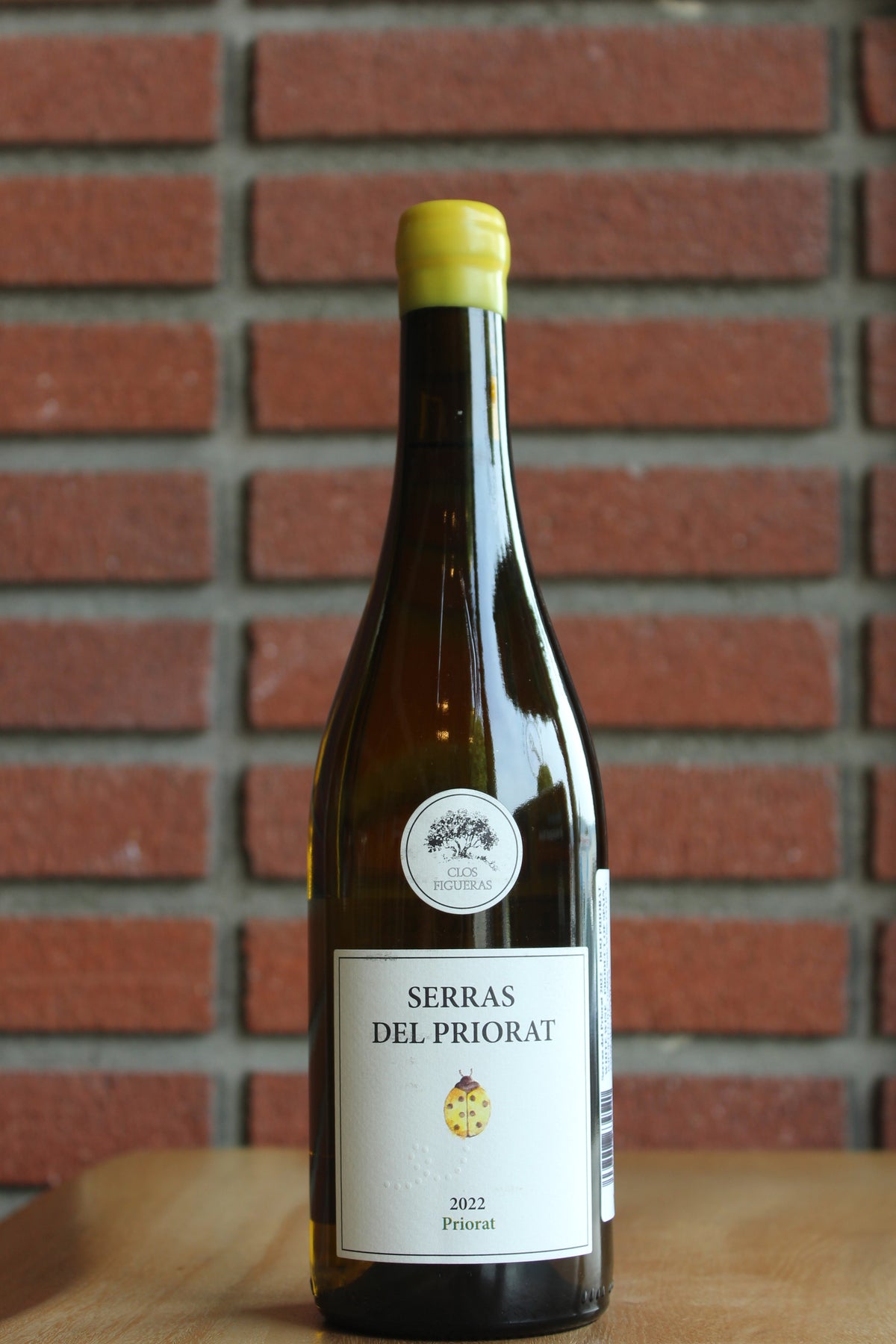
Clos Figueras "Serras del Priorat" Blanco 2022
Clos Figueras "Serras del Priorat" Blanco 2022
Priorat DOCa, Catalonia, Spain
Couldn't load pickup availability
Share
-
Tasting Notes
In the glass, this wine showcases a brilliant, pale straw-yellow hue accented by sleek silver highlights. The aromatics open with an energetic, high-altitude identity, leading with crisp pear, tart green apple, and bright lemon zest. With a bit of air, a sun-drenched, exotic layer emerges. Intoxicating tropical aromas of ripe guava, juicy mango, and a punchy splash of key lime pie unfold, capturing the warm Mediterranean essence of Catalonia's rugged valleys.
On the palate, the texture delivers a remarkably supple, medium-bodied mouthfeel that is soft and velvety on the tongue—a structural luxury achieved through six months of aging on the fine lees. This weight is perfectly balanced by a brilliant, mouthwatering acidity. Ripe orchard fruits like yellow peach and crunchy pear collide with a vibrant tropical mango core, offering a lush fruit profile that is incredibly generous without ever feeling heavy or cloying.
The finale showcases the distinct impact of Priorat’s famous slate soils (llicorella). As the fruit gently tapers off, it leaves behind a long, clean, and salivatingly precise finish. A chiseled line of crushed flint minerality cuts through the palate, rounded out by a beautifully savory, oceanic saline note. The result is a remarkably fresh, complex, and lively wine that offers a masterclass in liquid balance. -
Story
Before he ever owned a vine, Christopher Cannan was an elite wine merchant who spent decades introducing the world to Europe’s greatest luxury estates. But everything changed in 1997 when his close friend René Barbier—the founding father of Priorat’s modern wine renaissance—showed him a spectacular, rugged, completely abandoned plot of land. Tucked away in Catalonia, it was a chaotic mess of steep terraces, wild fig trees, and pure llicorella (slate) soil. Christopher fell hard. That very same afternoon, he drove straight to Barcelona, met the owner at a café right underneath Antoni Gaudí’s famous La Pedrera building, and sealed a rapid handshake deal. Clos Figueras was officially born.
While the estate’s ancient-vine reds were a massive success, the real magic happened a year later thanks to a hilarious nursery screw-up. Christopher ordered red Cabernet Sauvignon vines to plant on the terraces, but when the grapes finally grew, they didn't turn red—they stayed white. The nursery had accidentally shipped him Viognier instead. Rather than tearing the healthy vines out, Christopher leaned into the serendipity and kept them. That quick pivot completely redefined the trajectory of the estate's blending philosophy.
Today, run by Christopher and his daughter Anne-Joséphine, the certified-organic property is globally celebrated for proving that Priorat—a region famous for massive, brooding reds—is actually capable of producing legendary, texturally luxurious white wines. By blending traditional Garnacha Blanca with a touch of that "accidental" Viognier and Chenin Blanc, Clos Figueras crafts bottles like the Serras del Priorat. It's a gorgeous balance of rich, sun-drenched Mediterranean fruit and electric mineral tension that captures the exact spirit of the wild landscape it came from.
-
Somm Notes
Everyone knows Spain’s Priorat region for its big, bold, expensive red wines. But the real insiders are hoarding the rare white stuff. Enter Clos Figueras’ 100% Garnacha Blanca—an organic, small-production stunner that manages to be simultaneously opulent and electric.
This isn't your casual, pool-side patio pounder. It’s a white wine with serious main-character energy. Because it spends six months resting on its fine lees in stainless steel (the winemaking equivalent of a weighted blanket), it has this gorgeous, supple, velvet-like texture. But just when you think it’s getting too rich, the region’s intense volcanic and slate soils kick in, striking the palate with a bolt of vibrant, wet-stone mineral tension and chiseled salinity. It is complex, completely unpretentious, and deeply satisfying.
The Somm Quick-Sip:
- The Vibe: A candlelit dinner party where the music is loud and the conversation is completely uncensored.
- If this wine were a song: "Style" by Taylor Swift. Classic, textured, visually vivid, and never goes out of style.
- The Critical Praise: Living up to the pedigree, James Suckling awarded this 2022 vintage a stellar 90 points, specifically loving its nose of white almond, wet stones, and energetic drive. South America’s premier wine guide, Revista Adega, pushed it even further with a 92-point rating, celebrating its purity and long, structured finish.
To truly drink like an insider, you have to look closely at the bottle. First, the name: Serras translates to "mountain ranges" or "foothills" in Catalan. While Clos Figueras saves its ancient vines for its ultra-premium flagship bottles, Serras del Priorat is intentionally sourced from the younger, vibrant 10-to-12-year-old vines hugging the lower limestone and clay-flecked hillsides. The result? A style that is fresher, brighter, and ready to party right now without needing years of dust in a cellar.
Second, you will spot the letters DOCa (or DOQ in Catalan) stamped on the capsule. Priorat and Rioja are the only two regions in all of Spain to hold this absolute highest tier of wine classification. But here is the dirty little secret among sommeliers: DOCa status is often way more political and bureaucratic than it is a reflection of terroir.
The title acts as a strict regulatory border control. It doesn't mean the dirt inside the boundary line is magically better than the dirt two feet across the border. Instead, it dictates rigid, government-mandated laws: every grape must be estate-bottled locally, production yields are forced to be agonizingly low, and the market price must double the national average of standard appellation wines. While the stamp guarantees flawless quality control and high-end prestige, the true, jaw-dropping soul of this bottle comes from the ancient slate rocks and the hands of the winemakers—not the government paperwork. -
Region
The unique flavor profile of Spain's high-tier DOQ Priorat wine region is shaped by a 300-million-year-old geological phenomenon. Located just two hours south of Barcelona, this rugged winemaking territory is enclosed by the dramatic Montsant Mountains, creating a natural amphitheater of steep, gravity-defying terraces called costers. Millions of years of intense tectonic pressure and volcanic activity baked ancient clay and ash into a highly specific metamorphic rock. Known locally as llicorella, this fragile, reddish-black slate topsoil is embedded with reflective particles of quartz and mica, which mirror the intense Mediterranean sun back onto the low-yielding vines to optimize grape ripening.
For viticulture, this historic Spanish terroir presents an extreme environmental challenge. Llicorella slate contains virtually zero organic nutrients and holds absolutely no water at the surface, forcing rainwater to drain instantly through fractured stone fissures. To survive the arid Mediterranean summers, old-vine roots must bore down up to 60 feet into the subterranean bedrock in search of moisture. This permanent survival mode naturally regulates grape yields, shifting the plant's energy away from leaf growth and into a tiny handful of deeply concentrated berries. The resulting harvest produces wines with an unparalleled structural density and a highly coveted, salivating mineral tension.
While ancient red grape varieties like Garnacha (Grenache) and Cariñena (Carignan) traditionally rule these steep slate slopes, Priorat’s rare white wines are rapidly becoming a global benchmark for collectors. White grape varieties like Garnacha Blanca (White Grenache) thrive perfectly in the lower, clay-rich pockets sandwiched between the ancient slate layers. When crafted by boutique producers, these white Spanish grapes absorb the undeniable signature of the nitrogen-poor llicorella soil, yielding texturally luxurious, medium-bodied wines that perfectly balance ripe Mediterranean stone fruit with a distinct, smoky finish of crushed flint, sea salt, and wet stone.